Showing posts with label Alaska. Show all posts

Friday, December 30, 2016

My wife Star Witch


My wife has kept me grounded for thirty-five years.  We still hold hands at night in bed as we fall asleep. 


She is Wicca or Pagan and celebrates the seasons.  Her favorite season of the year is Halloween. 


She has a broom that was made by an artisan in Appalachia Tennessee; it has a handle of sassafras and she always decorates it to the season.


 We have two cats, but the young (Kliban) Coon cat is definitely her familiar.


I was a hard case, on the highway to hell when she agreed to come with me – and I have never understood why. 

We have lived in a remote farmhouse with no plumbing, water or electricity while we attended college; we have traveled to Alaska twice, for a total of eleven years teaching school in the remote Indian and Eskimo villages; 


we have shared multiple-lifetimes of adventures during our time together; and I can truly say that the thirty-five years I have been with her is the only quality time of my 70++ years.


And if there were eternity
I’d love her there again
the Ol’Buzzard


Sunday, December 15, 2013

A TREATISE ON PISSING


As I have grown older pissing has become a major focus in my life.   When I was young I could drink a six pack of beer then go out into the parking lot and piss over the hood of my truck – I could hold my pee and when I did pee I had the pressure of a fire hose. 

Now I pee about every two to three hours – this includes during the night.   I get up an average of two to three times during the night and go downstairs to pee, then go back to bed - and when I do pee it dribbles like a leaking faucet.   When I go to the movies I piss before I go into the theater and hope to make it through the movie without having to go pee. 

Recently Murrmurrs did a post where she told of her husband pissing in the back yard. 

 I have been an outdoor pisser most of my life.   As a young man I spent much of my time hunting, fishing, camping and pissing outdoors.   I was a Navy winter bush survival instructor and for years pissing in the woods was more the norm then an exception.  

I piss in the back yard regularly when I am mowing the grass, snow blowing, working on outdoor projects or stacking firewood.  Most nights, regardless of the weather – wind, rain, sleet or snow - I go outside, look up at the sky or into the dark woods, and piss before going to bed. 

Pissing is more than a bodily function for males.   Boys and men have it down to an art form, but women don’t have the same relationship with pissing that we have.   Pissing can be fun.  Little boys (and some men) will write their names in the snow. Boys like playing with their dick so when they take it out to piss there is a natural tendency to wave it around.   Women don’t seem to have the same pleasures pissing.

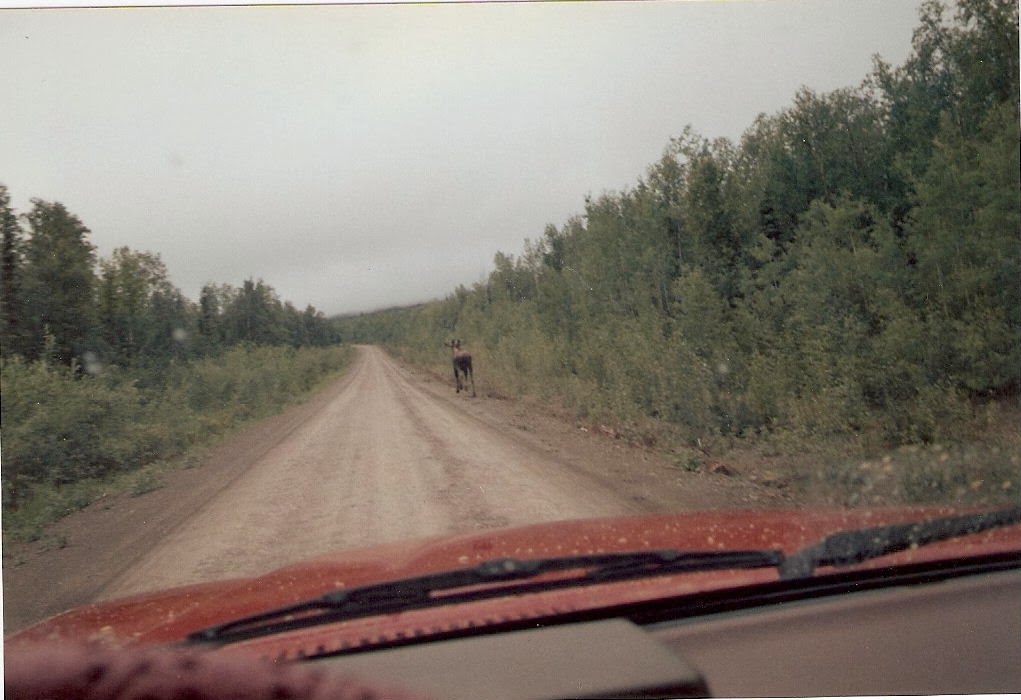
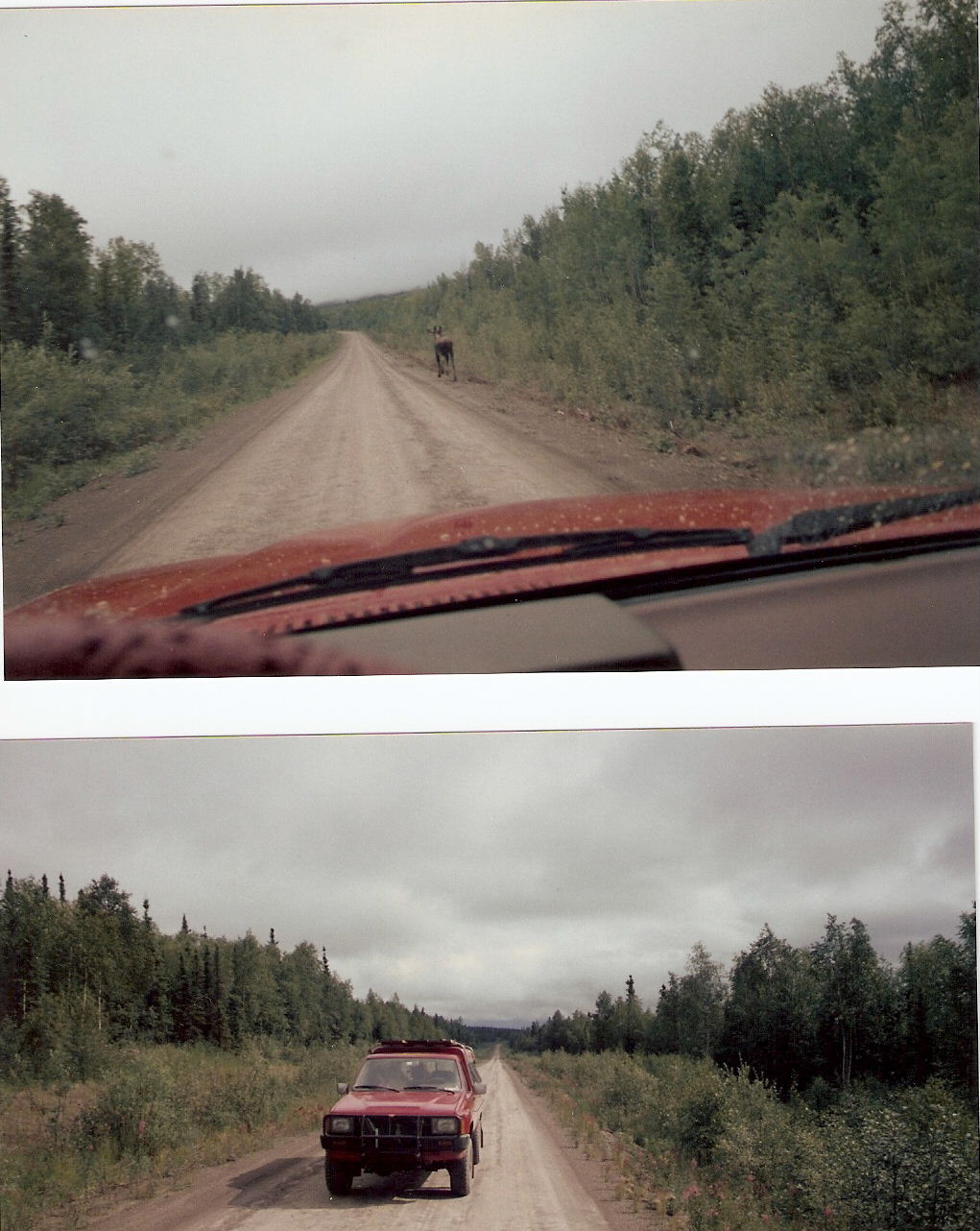
My wife and I taught school in an Indian village about one hundred and fifty miles north of Fairbanks.   We would come out of the village about four times a year - during holidays and for groceries and supplies. The village was connected to the road system so we could drive into the village.   We would travel about seventy five miles up the ‘Haul Road’ (the road to Prudhoe Bay)


 and then swing off on a one lane dirt road for the last seventy five miles into the village.  

The trip would take us anywhere from three hours in the summer to five hours in the winter.   We would gas up our truck (two twenty five gallon tanks) before leaving Fairbanks – grab sandwiches and drinks and roll out. 


Especially on the long arduous winter drives we would need to stop and piss about half way on the trip.   There was a gravel site shortly after leaving the Haul Road where we would stop.   
At thirty-five to forty degrees below zero with a wind blowing my wife could not drop her pants and squat to pee, so we bought her a ‘pee cup’ designed for women to be able to pee while standing up.   

My wife never really mastered the standing up and peeing – she had to learn things that little boys discover early: like you can’t pee into the wind.  It beat a frostbitten bottom, but it was always a challenge for her.   I, on the other hand, would put the wind to my back and let it rip – writing my name in the snow.  

The weather tonight is zero and it is starting to snow.   I stepped outside about an hour ago to pee.   The night is dark and the sky is overcast so I watched the blurred lights of nearby houses and was hyper-conscious of the snowflakes falling around me.   I could hear movement in the wood – possibly a deer or maybe just a rabbit.  It was invigorating and gave me a feeling of closeness to nature and my small place on this earth.  

I would like to continue on with this; but I have to pee, so I’ll say good night.
the Ol’Buzzard


Wednesday, December 11, 2013

THE CAT


Many years ago my wife and I taught school in the Indian and Eskimo villages north of Fairbanks in Alaska.  In our last year with the Yukon-Koyukuk School District we were transferred to a village that had no District housing available.   We had friends in the village and one of the elders offered us his old log cabin on the outskirts of the village. 


The cabin had been derelict for at least a decade and the windows and door were broken, the roof needed repair and the cabin was full of vermin.  

We went into Fairbanks and bought window panes, insulation, sheet rock, roofing material and a gravity-fed oil burner heating stove.   We spent two weeks making the 16x16 cabin livable.


 While we were in Fairbanks we also went by a cat rescue facility and found a two year old, eighteen pound, Maine Coon Cat that we decided we would need to take care of the vermin that lived in and under the cabin.


Alaska winter


We left Alaska after that year


Alaska Spring

Hobbes was our first cat.   Hobbes immediately attached himself to me.  Over the next ten years Hobbs was my best friend.   If I was working on a ladder he would be up there with me – if I had my tool box open he would be there inspecting it – if I was reading a book I would be startled by an 18 pound fuzzy cannon ball dropping into my lap.   I lost my best friend about twelve years ago and I still miss him.

Three years after we left Alaska, while living in Kentucky, we got a baby Ragdoll kitten.


This cat is my wife’s shadow.   Everywhere my wife goes the cat is right there.   The cat likes me and she accepts attention from me, but there is no doubt that the cat has adopted my wife.  


Our girl is now eighteen years old and we know that we shall soon loose her – and that will be a trauma, especially for my wife.    My wife is awaken by the cat each morning – they go downstairs together and the cat waits in the kitchen to be fed.   They interact all the time: my wife talks to the cat and the cat talks back.   My wife sings to the cat.  They have a relationship beyond human/animal.


 We very often have to spell around the cat because the cat knows what we are saying.   I honestly believe that the cat understands quite a bit of our language.   One of us can say it is time to go to bed and the next thing we know the cat is rounding us up to go to bed.  If we are going to have tuna or chicken or salmon we can’t state it or she will beat us into the kitchen to get her share. 

We not only talk to her, but she talks to us when she decides she wants something or wants us to do something.   This is the type of interaction you don’t have with a dog. 


When we loose her it will be a while before we have another cat.   I don’t think we will ever have another dog because dogs are too much maintenance.   We have done our living in the woods and living in the back country, and that is the place to own a dog.  But now that I have grown older we are living closer to town – and the type of lifestyle we lead really doesn’t lend itself to a dog.    

But a cat in the house is a comfort, and we probably will have another cat at some time.


the Ol’Buzzard

Tuesday, October 29, 2013

A SOUTHERN HISTORY AND A RAINBOW VACUUM CLEANER


The first statement I must make is that my earliest life was influenced by the Old South southern culture.   Anyone not a part of that bygone culture will not understand the Faulkneresk (William Faulkner: A Rose for Emily) mind set of southern men and women that hid family secrets and lived lives of illusion. 


To begin at the beginning my grandmother was born.   Her parents lived in a small Mississippi Delta town.  She was born in 1892; and it is my understanding that her father owned and operated an undertaker and livery service.   He had been a teenage scout during the Civil War and guided Confederate soldiers through the Delta around Union lines.  

My grandmother was married at age fourteen to a man in his early twenties.  Her husband was from Kentucky but was the station master for the Illinois Central Railroad in a nearby Delta town.  I can remember my grandmother telling me how handsome he was riding his horse when he came to court her. 

Within a very few years my grandmother had six children: four girls and two boys.   My mother was the youngest.  

My grandfather was strict, but of all his children my mother was his favorite, and the hardest to control.   From the stories I have heard, my mother reminds me of the young girl Scout in To Kill a Mockingbird.   At eleven she got into her father’s whiskey and took his Lincoln automobile and drove through the cotton fields. She became pregnant as a young teen and, as families did in that day, she was sent away to live with her aunt and uncle in a different town until the baby was born.   About that same time the aunt and uncle ‘adopted a baby.’    I suspicion that their child is my half-sister.  

True to the southern Mississippi mystique, the story does not end there.   My mother’s older sister was engaged to marry a man from Vicksburg.   While her sister was working at a defense plant in Memphis my mother secretly accompanied her sister’s fiancé on a business trip to Savannah, Georgia.   There she became pregnant with me.   Needless to say, this broke up the engagement of her sister.  

So to pick up in the middle: I was born.  My mother abandoned me in the hospital, but my aunt came down from Memphis and retrieved me.  I was passed around for a very short time and ended up with my grandmother, whose husband had just left her for a younger woman.   My grandmother did not like my birth name so she changed it – she also did not like my birth date so she changed that also.

We soon moved to my grandfather’s home town in Kentucky where we lived for eight years: My grandmother possibly thought her husband might return to her - but he never did. 

The story does not end here.   At the age of eight, my grandmother moved me back to her home in the Delta of Mississippi.    Her children were all grown and so she received no alimony, and this was before welfare so we were indigent and lived off the generosity of her oldest daughter who had married well.  My grandmother was well respected in the community (ie. A Rose for Emily) but we had nothing except her pride. 

I grew up believing my grandmother was my mother and that my actual mother and aunts and uncles were my brother and sisters.  It was not until I joined the Navy at age nineteen that I discovered my name was not my name; my birth date was not my birth date; and my sister was my mother and ….   I don’t believe even Faulkner could have put this story together.  

I have absolutely no antipathy toward my mother.  She was a woman that could not be forced into a mold of conformity.   After I was born she decided to enlist in the Navy; but women who had had children were not eligible.   My grandmother’s brother-in-law was governor of the State of Mississippi and my mother imposed on him to use his political connections to bypass the unmarried/childless requirement.  Strings were pulled and she enlisted.   She was in the very first group of Navy Waves to be assigned in a war zone.  She was a hospital corpsman aboard a hospital ship in the Pacific during the Second World War.   One of the men she nursed was Claire Chennault, commander of the Flying Tigers.  They corresponded for a while.   Later she married an architect in Vicksburg, Mississippi.  He had been stationed in Pearl Harbor, at the same time she was assigned; though they had never met.   

Fast forward: I left the South when I was eighteen and did not return for forty years.   I spent twenty-two years in the Navy where I was a drinker, a fighter, a nonconformist and a womanizer – not a very nice person.   The military rank and social structure was abhorrent to me; but I stayed in the Navy because I found I could control my assignments.   When I retired I married a wonderful young woman: we attended college together and then move to Alaska where we taught school in remote Indian and Eskimo villages.  

After leaving Alaska we moved to the small town in Kentucky that I remembered from my childhood (no way would I have ever gone back to Mississippi.)   I really could not say why I felt the need to return to a place in the south, other that I identified it with my roots.   Perhaps this poem written in Kentucky will explain:

SITTING ON THE PORCH ALONE AT MIDNIGHT WITH A BOTTLE OF WHISKEY

Kinsmen from the distant past
Eternal specters faintly moving
Never seen but somehow speaking
Their voices just beyond my reason

Unknown forces drew me back
Can destiny be preordained?
Keeping some appointed meeting
Generations fade but never leaving.

We had saved a little money and were able to pay down on a house.   We owned five acres that was surrounded by two hundred acres of farm land.   No neighbor was visible from our house.  The place had been built in 1864 and was structurally sound and in immaculate shape.   It had been owned by an undertaker and his wife who used it as a party house and retreat.  The rooms were eighteen-by-eighteen with eleven foot ceilings and two huge fieldstone fireplaces.  They had decorated the place in French-whorehouse chic with wall to wall mauve carpets and chandeliers – not exactly our taste but the location was fantastic and the rooms were great.    

Now to the Rainbow vacuum cleaner.   We had a little bit of money left over and because of the carpets decided we should by a quality vacuum cleaner.   We settled on a Rainbow water vac.   The price was almost a thousand dollars back then (1993.)   We felt guilty spending that much on a vacuum cleaner; but the unit was real quality, with stainless steel wands and hard rubber tools.  

That was twenty years ago.  Now we live in a small cabin in Maine and this morning we vacuumed the living room with that same Rainbow vacuum cleaner.  

There is something to be said about quality.

Sometimes you get what you pay for.

the Ol’Buzzard


Wednesday, November 16, 2011

DEATH IN A CULTURAL PROSPECTIVE

DEATH AND TAXES ARE UNAVOIDABLE

But Hell, you can refuse to pay your taxes.


When you live next to a cemetery you cannot weep for everyone

Old Russian Proverb


The death industry in our culture is not to service the dead; but, its purpose is to exploitate the grief and to play on the guilt of family members of the deceased in order to bilk them for as much money as possible. This is a billion dollar industry that never has a recession.


There is the transportation to the funeral home, the embalming (now that’s a macabre business,) clothing, setting the hair, makeup, the coffin (that can cost as much as a small car – or a Mercedes if you’ve got the cash,) the viewing, the service, the trip to the cemetery, the plot and perhaps a wake. $$$$$$$$$$$$$$$$


Though some of this may seem necessary, it is all done by someone else – for pay. It is impersonal, and as a result it does not lend to closure.

In our culture we don’t want to be involved with the dead anymore than necessary. There is an unhealthy attitude of dread, disgust and fear attached to the dead – regardless to how close we were to the deceased. Especially for kids, in a time of mass media zombies and vampires, being forced to see a dead person is scary as hell.
They're comming to get you Barbara...


Death rituals in different cultures may seem bizarre when viewed from our removed cloistered and cultural mindset, but what is considered normal is a matter of cultural perspective.

In Athabascan Indian villages throughout Alaska, death is viewed as a natural passing. Native people grieve for their lost but they do not have the fear and revulsion of the dead that exist in our society.

Athabascan villages are matriarchal societies: the clan is counted through the mother line. When a death occurs, the women of the extended family bathe and clothe the dead, the men build a coffin which is then decorated by the women. The coffin and body is placed open in the living area of the home, and for the next few days (until the day of the funeral) the whole village comes to visit and to show concern and support for the family.

Beginning the day of the death the family of the deceased is expected to prepare breakfast, lunch and supper for the entire village. The extended family chips in with food and provisions but the preparation and serving is done by the women and children of the immediate family. Visitors come and fill their plates and sit and eat and talk in the room with the body, while the adults and children of the household are busy with the preparation and serving of food and the cleaning up. People, including children, come and go all day and into the night.

There is a constant vigil of the body and the house is always full of people talking and laughing, drinking tea or coffee, and recounting memories of the deceased. The body is never left alone.

By the day of the funeral the family of the deceased is exhausted. There is a Christian funeral of some denomination in a village church or hall before the coffin and body are buried ( In the far arctic the bodies are often kept frozen, either in the village or at Fairbanks, until the ground can thaw enough for the final burial and grave side service.)

Grave yard in an Athabascan village.


After the body is buried there is one more service to be performed: usually a potlatch is held.


A potlatch is a ceremonial get together and feeding of the entire village. Butcher block paper is rolled out on the floor of the village hall or meeting place. People bring their own plates and silverware and sit on the floor or on chairs on each side of the paper. The extended family, or group giving the potlatch, served moose head soup, wild meats, pasta salads, berry deserts and other cultural delicacies. Often at funeral potlatches guns, bandanas, and clothing are given away as gifts to the people attending. Potlatches always end with elders speaking or lecturing the assembled; and, at certain celebrative potlatches there is Indian singing and dancing. (It is worth noting that at one time the government, at the urging of churches, outlawed potlatches.)


You have heard that it takes a village to raise a child. It also takes a village to bury the dead.


The Athabascan death ritual may seem strange or even bizarre when viewed from our cultural perspective. But the village has its own culture. In the village death is a natural occurrence and dead bodies are not feared. The body of the deceased (we seem to prefer that word to dead) is prepared and viewed and honored by the family prior to the funeral; and by the time of the funeral the family is exhausted from its obligation and homage to the passed family member. There has been support from the entire village, exhaustive labor and there is personal, family closure.


In my next and last post on death and culture I will discuss the handling of death in the Yup’ik Eskimo villages of southwest Alaska.

the Ol'Buzzard

Sunday, November 13, 2011

ALASKAN NATIVE CULTURE - ATHABASCAN

I wanted to continue my post on DEATH and how it is viewed differently by different cultures.   The only other cultures I have been submersed in, other than my own, are the Indian and Eskimo cultures of Alaska.


For eleven years my wife and I taught school in the remote interior villages.   Before I can discuss the way death is dealt with in these cultures I first have to give a little background on the cultures themselves.


All native cultures are not the same.   They have different languages, different traditions and different spiritual beliefs – and they do not like each other. The Athabascan (sometimes spelled Athapascan) Indians of the Interior were never subjugated by the “white man.”   In the traditional villages they are a proud and somewhat defiant people who do not take well to outsiders.   A village is a third world country that operates within its own set of cultural norms.   There is a high incident of drug and alcoholism - child and spousal abuse.   When my wife and I went into our first village, where we taught for seven years, we were made to feel as outsiders.   The villagers spoke of “white man” as the cause of all their problems and the root of all the shortcomings of the village.


It took about three years for the village to get comfortable with our presence and accept us as “their teachers,” though we were never fully accepted.


Truthfully, the villages have a good reason for their prejudice against “white man” and the government, which they identify as one and the same.   Until recently the government through the Department of Indian Affairs had a heavy hand when dealing with the villages; and as might be expected Christianity has done its share of exploitation.   In Sally Carrighar’s book Moonlight at Midday she describes how the Christian missionaries running the school in a costal Yup’ik Eskimo village railed against women being topless in their homes, which was the accepted custom.   Now, years later, the villages are permeated with a mixture of Christianity and shaman beliefs.

The Stick Dance to placate or communicate with the dead.

Jackson

In Alaskan Native history we find a perfect example of the evils of a consolidation of Church and State. At the turn of the century, Sheldon Jackson, a Presbyterian minister cum missionary working in Alaska, was placed in charge of Alaska Native education by the Federal Government. Jackson’s idea was to assimilate the Native cultures by creating white Christian clones of the Natives.   He divided up Alaska into school districts and assigned a district to each of the Protestant faiths requiring they set up missionary schools that would discourage Native traditions and teach white Christian values.   Later Jackson established a series of boarding schools and forced many Native children to leave the village and attend his schools.   At the schools, children from different villages and different Native cultures were mixed together, and speaking their Native languages was forbidden and resulted in corporal punishment.


Over the succeeding decades many Native students lost their language and cultural identity.   This condition continued until 1972 when Molly Hootch vs. the State of Alaska and the results of the 1976 Tobeluk Consent Decree declared Native children had the same right as white children to have public education available in their home villages.   Many parents and grandparents, who had children in school, were the product of these boarding school educations and harbored great resentment.

Though there are churches in all the villages, the people still cling to many traditional beliefs, and these beliefs can very greatly from village to village.   In our village children were told if they became lost Raven would guide them back to safety.   Men believed animals could understand human language; if a man showed up at his uncles house with a gun it was understood he wants to hunt: If he asks his uncle to go hunting the animals would hear and hide. Girls were told to bare their breast if they encounter a bear while berry picking and when the bear recognized they were female it would not feel threatened.   The potlatch was the center of traditional cultural participation.


Children learning Native Dance from their elders in preparation for Potlatch.

A potlatch is a ceremonial feed, complete with singing and dancing, that involves the whole village.   The potlatch is modified for different occasions including honoring a distinguished visitor, marriage, celebrating a particular village member or event, communicating with the dead and for, of course, funerals.

In my next post I will describe the death traditions in the interior Athabascan villages

Sunday, March 13, 2011

NORTH TO ALASKA


ARCTIC MEMORIES

 The Arctic in his soul
Like a chill from Arctic cold
Holds memories of Arctic places
And dark hair Arctic faces
That haunt his dreams and memories
Now that he’s grown old


How do you explain a place
That’s lost in time and space
Where the sun begins to set
Though it hasn’t risen yet
And the brief light of merging days
Creates a dreamlike eerie pace


Where snow you know is white
Drabs grey in Arctic light
And spruce that should be green
Define black the Arctic scene
A skeletal world of dark and light
That spawns apparitions in Arctic twilight.


Where the wind on dark nights moan
Driving chills down through you bones
And the northern lights aglow
Reflect unearthly on the snow
The frozen scene where reality bends
And visions haunt you when alone.

And the Arctic in his soul
Like a chill from Arctic cold
Holds memories of Arctic places
And dark hair Arctic faces
That no one wants to hear
Now that he’s grown old.


My wife and I taught school in the remote Indian and Eskimo villages of bush Alaska for eleven years. In the Arctic we would get up in the dark, go to school in the dark, come home in the dark and go to bed in the dark. We lived as invaders in a third world culture and were sometimes looked on with disdain.

Writing Poetry (of sorts) became an outlet for me.
I plan to share some Poems over the lifetime of this Blog.


In 1985 my wife and I graduated from college and immediately headed to Alaska for teaching jobs.  We made the trip of almost 6ooo miles in ten days.  


Shortly after arrival we were hired to teach in an Athabascan Indian village about 130 miles north of Fairbanks. 


The village was on the road system, though the trip was arduous.   The road was kept open most of the year, but especially in the winter the trip could be a dangerous so we only make the trek out three or four times a year.


Haul Road

road to the village

The village was one hundred and thirty miles north of Fairbanks: seventy-five miles up the gravel “Haul Road” to Prudhoe Bay and then fifty-five miles on a one lane dirt road into the village. The trip to Fairbanks took between four and five hours when the roads were passable. We would usually travel to Fairbanks on food or medical runs and occasionally on school holidays to touch base with our own culture.  


WINTER TRAVEL

The road gets long going into Fairbanks,

As November winds swirl and howl and blow up drifts;

And darkness settles in early at the Pass.

The road to the village at fifty below zero.


When we arrived in the village for our first teaching job the village Chief came over to indoctrinate us. Among other things he said that the village had two wells we could draw water from. One was at the generator shed but it was polluted so we should use the one at the lodge (community building.) A few weeks later he came and told us that the well at the lodge was polluted so we should use the one at the generator shed. A few weeks later he came and told us the one at the generator shed was polluted so we should use the one at the lodge – this continued in some form for the rest of the year (We went into Fairbanks and bought a water distiller.)

The next year the state put in a new well at the fuel farm – and guess what… they struck fuel oil in the water.

Snow melt water
The third year the government paid for a new well but it was placed in a low swampy are and in the spring time the swamp flooded and polluted the well.

When we came in for our fifth year a new well had been drilled but half way through the winter the well went dry. We melted snow for bathing and dishes, and on the weekends traveled to the nearest village at the end of the road, fifty miles further down, to do our wash and bring back water.


THE WELL DILEMMA

It’s winter in Alaska

And it’s forty below.

The wind it’s howling

And it is starting to snow


One new well’s polluted

Another’s run dry.

The one drilled this winter

Doesn’t work – don’t ask why.


Five wells in five years

And you’re still afraid to drink.

For the water looks like coffee

And has a god-awful stink.


Winter road to the nearest village
to wash clothes and get drinking water.


So come this weekend

We’ll risk winter slaughter.

Driving a hundred miles

For ten lousy gallons of water

They also had a Road House
we could get a hamburger and beer
Our village was dry.

Death is not an unusual occurrence in the village. People die from old age, from fights over women and from alcohol and drug related incidences.  Many of the villages are only accessible by air and air crashes are fairly common.  


The Stick Dance to communicate with the dead.

In 1990 a young principal in our school district in an arctic village died in a plane crash.  He was married to a native and had three young girls and an infant son.  He was traveling with his girls into Fairbanks when the bush plane crashed on takeoff.  He was thrown clear but went back into the burning plane for his daughters.  His wife and infant son were not traveling with them. 


A good man dies an agonizing death
Only after finding his children dead

The woman who yesterday had a family, laughing, talking, dancing
Today is all alone-

The past wiped out in one unbelievable moment.

There is no god that would allow this.

In 1990 we had been teaching in the same village for five years (most teachers only last two or three years in the bush.) We liked teaching Native children and felt we were good at it. Our gold was to remain bush teachers until we could vest in a retirement and truly retire.


DAY DREAM 1990

I would like to see a time
When I can sit with pen and rhyme
No obligations to a job
No firm commitment time to rob
With days to do as I should please
To walk the woods and smell the breeze
And sit beside a roaring fire
And gloat because I am retired.


We stayed in Alaska for eight years.  When we left we moved around, did some travel and finally returned to Maine.   In 2004 we returned to Alaska for three years where I was principal in two southwestern villages.  More on that at sometime in the future. 


A link to a web page for Alaska teachers and visitors:   Alaska Web Sights