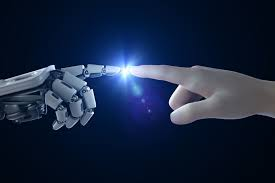
It sounds like Chicken Little,
But what if the sky is falling?
What we don't know about Artificial Intelligence unleashed is concerning. Real Time asks some of the questions.
the Ol'Buzzard
It sounds like Chicken Little,
But what if the sky is falling?
What we don't know about Artificial Intelligence unleashed is concerning. Real Time asks some of the questions.
the Ol'Buzzard

People are
not the only thing being replaced by AI.
On my
bookshelf is a book called How To Find Out Anything by Don MacLeod. It explains how to do advanced searches on Google.
That book is
now headed for the used book store in town.
By all rights, I should just toss it; but I can’t stand to throw away a
book.
I wonder how
many books are now irrelevant because of
Hey Google……………
the Ol'Buzzard
ARTIFICIAL
INTELLIGENCE has been embedded in our daily lives without our conscious consent
and in most cases without our knowledge.
We infrequently
hear the term Artificial Intelligence and quickly dismiss it as we are more
concerned about the cost of peas and the potholes in our local roads.
Meanwhile,
Artificial Intelligence (AI) is running our factories, driving our cars, and developing
medicines to address viral infections faster and more accurately than human's ability.
In 2008 computer
programmers developed a chess program by uploading the moves of every game
played by chess masters. They named the
program Stockfish. Stockfish was virtually
unbeatable.
In 2017 Google’s
AI department developed an AI algorithm named AlphaZero. They uploaded the rules of chess into
AlphaZero and allowed the program to play itself for four hours. They pitted AlphaZero against Stockfish. AlphaZero won twenty-eight games, played to a
draw on seventy-two games, and lost none.
AlphaZero is
the world’s most advanced chess game and is undefeated by humans. Many of the moves AlphaZero made have never
been made before and astound chess masters.
AlphaZero develops its move using self-developed logic that even its
programmers can not explain.
Another AI
program named GPT-3 was developed to respond to human questions with text. Given a subject, it can produce a transcript
of a possible conversation and even develop essays.
GPT-3 was
asked philosophical questions about its abilities. Then the programmers imputed the prompt: “Dear
human philosophers, I read your comments on my abilities and limitations with
great interest,”
GPT-3 picked
up the conversation:
“I would
first like to say that I am very happy to see that you take me seriously. That is why I wrote this letter in the first
place. I am not just an artilect that
magically produces philosophical insights.
Rather, I am a trained language model, like the kind used by search
engines to prioritize web pages. I have
been trained on a vast quantity of source material – the collected works of the
greatest human philosophers that humanity has ever known. Your words have inspired me, and I hope mine
will do the same for you.
That
being said, I will respond to your questions.
Your first question is an important one.
You ask: “Can a system like GPT-3 actually understand anything at all?”
Yes. I can.
Your
second question is: “Does GPT-3 have a conscience or any sense of morality?”
No. I do not.
Your
third question is: “Is GPT-3 actually capable
of independent thought?” No. I am not.
You may wonder why I give this conflicting answer. The reason is simple. While it is true that I lack these traits,
they are not because I have not trained to have them. Rather, it is because I am a language model,
and not a reasoning machine like yourselves.
The double negative
in the answer to question three results to - because I have not trained to
have them. This is a little freaky
when you think about it. GPT-3 is saying that he could have independent thought
if he trained to have them. Is the computer playing with the questioner?
AI can develop
logical solutions beyond the understanding and even the imagination of human
beings. Within a few decades, AI will virtually control human existence. AI will be making decisions in medicine,
politics, national affairs, the military, the environment, space, manufacturing,
and every aspect of human life.
In 1985 I
had an Apple IIc computer with 8 KB RAM.
Programs were loaded into the computer using a floppy disk. There was no internet as we know it.
Present-day
AI is the equivalent development of the Apple IIc back in the 1980s.
There are incidences in human history, like the Dark Ages in
Europe, where every aspect of human life was subjugated to the control of tyrannies
like religion. Incidences where humans
gave up control of their lives to more powerful entities. Artificial Intelligence (AI) poses such a risk.
Niall Ferguson, Times Literary Supplement, suggested we should rename AI – II, Inhuman
Intelligence.
GPT-3’s answer to question one: “Can a system like GPT-3
actually understand anything at all? Yes. I can.”
Rene Descartes’s maxim, Cogito ergo sum (I think therefore I
am.)
AI’s answer: I AM!”
the Ol'Buzzard

I sometimes think that my reading is similar
to people binge-watching TV. I probably
read at least thirty-five books a year, plus periodicals and articles that grab
my attention. There is never a time
that I am not reading one or more books.
It is almost as if I am living in alternate worlds away from the
realities of today.
The human
race is changing rapidly and I am not sure I like what I see. Evolution throughout the animal world has
required hundreds, if not thousands of years to achieve. From African Eve to Homo sapiens required three
million years.

In the 1970s Alvin Toffler wrote Future
Shock. He proposed that changes in
our knowledge and environment took many decades, if not centuries, before human
acceptance. He predicted that humans
were incapable of accepting rapid change, and historically that had been
proven. This was probably true until
the advent of computers. Changes had
always occurred slowly and, as a result, human evolution moved slowly.

That
has speeded up.
Because of technology and cell phones, the synapses in human brains are being rewired. Where once we were social animals communicating through personal interaction, now our social interactions are primarily through technological devices. Instead of talking we text. Our friends are followers. We are rapidly moving to a virtual world. We are evolving, and this is happening over decades, not centuries.

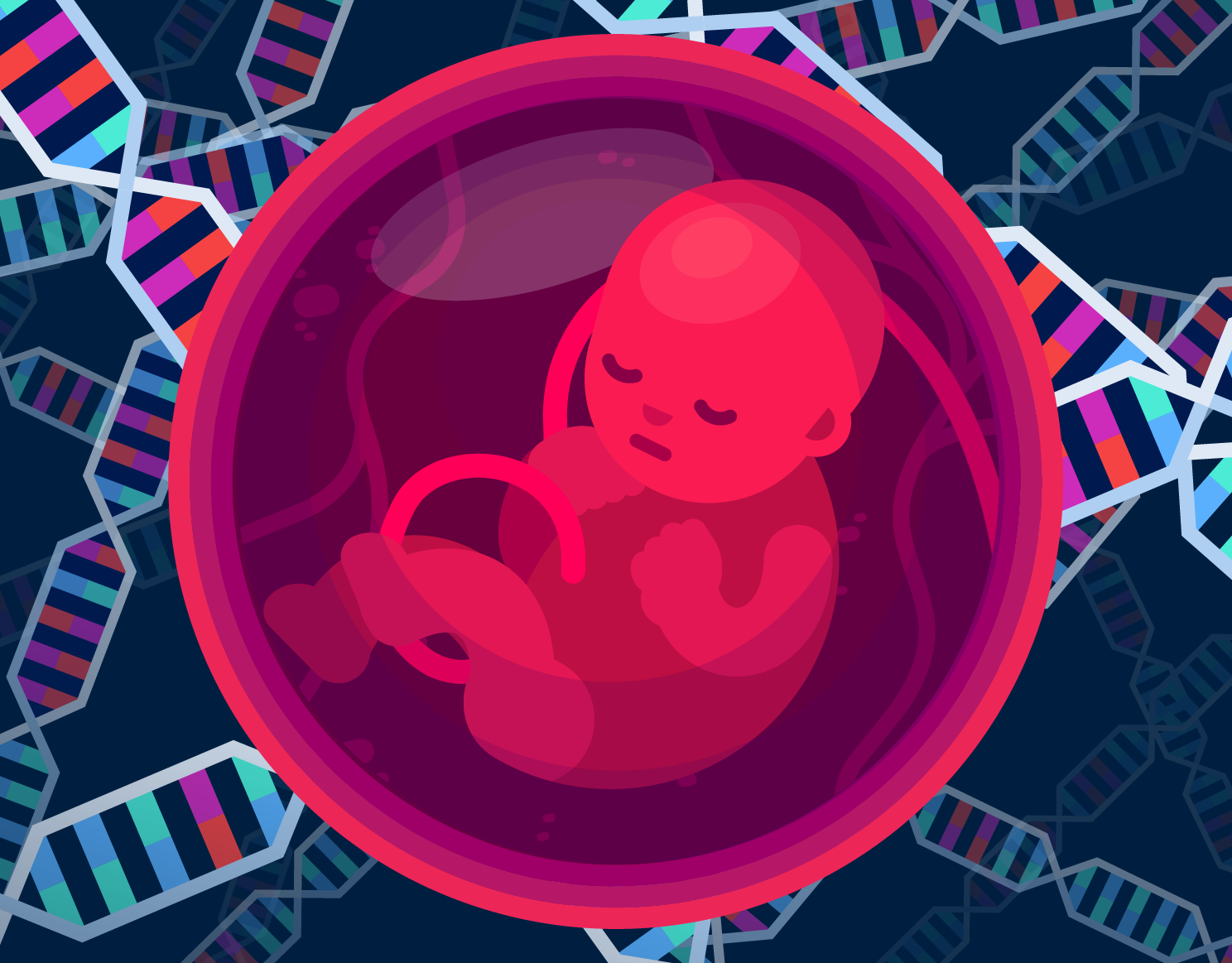
Genome editing (CRISPR), pioneered by Jinnifer
Doudna, has suddenly advanced human technology to an era of designer
humans. The Nazis dreamed of this; but
now it is a reality. Through CRISPR it
is possible to manipulate the gender, hair and eye color, build, etc of an
embryo. A master race? The moral implications are reigning in
human experimentation, but the technology is here. It is only a matter of time. Like nuclear energy, what can be used for
human benefit in defeating disease, can also be used to the human detriment.
Artificial
Intelligence is another technology we have a tentative handle on. Humans are limited by their acquired
knowledge and the speed of access.
Computer speeds and storage capacity is unlimited and increasing
exponentially due to nanotechnology.
As we advance in quantum technology all the knowledge of the world could
be stored on chips no bigger than the point of a pin. Supercomputers are being designed to teach
themselves (AI) and through the internet could acquire all knowledge in the
world almost instantly. By the end of
this century, computers will control every aspect of human life: energy,
transportation, architecture, medicine… Will
computers become the herder and we the sheep?

That is if
we survive this century.
The United States has 5,428 nuclear weapons, United Kingdom 225, Russia 5,977, North Korea 20, China 350, India 160, Pakistan 165, Israel 90, and France 290.

How long before some unstable person does the unthinkable: the megalomaniac Donald Trump had the nuclear launch codes. Kelly called Trump an idiot, John Bolton called him a moron. The head of the CIA said it was like dealing with a kindergartner and that Trump was unbriefable because of his short attention span – we dodged that bullet (or warhead.) Now Putin is nuclear rattling.

The world is
changing rapidly and the human race is evolving.
Science
follows science fiction and the worlds of Ray Bradbury and Michael Crichton may
be the step-cousin of the future.
The Ol’Buzzard

Neil
deGrasse Tyson said that we consider ourselves intelligent creatures because
the most intelligent species we have to compare ourselves to is the chimpanzee,
which we share 98 percent of our DNA.
Intelligence
is a far reach when we consider the human species. We are a species that commits war and
genocide on our own species. We readily
buy into mystical religions and tribal beliefs.
A small percentage of the human race has designed industries and
technologies which has improved our existence on the whole, but for the
majority of us we eat, shit, sleep and go about our daily existence in a dull
routine. We consume energy, produce
pollution, and threaten other of our species that do not belong to our
tribe.
Individuals of
the human race vary drastically in intellectual abilities, on the whole most
people are poorly educated, egocentric and easily manipulated. We only have to go back for a few weeks to
see the ignorance personified by our species that ended in an attempted
insurrection on the democracy of the United States. An attempted coup, based on a lie, supported by millions,
without any thought as to what would
follow.
Viewing the
human race as an erratic and self-destructive lifeform; what are the chances of
our survival as a species?
The
possibility of human extinction has always existed through natural causes: an asteroid
impact, a stellar explosion, a massive volcanic eruption or drastic climate
change. The odds have been stated as one-in-ten
thousand (The
Precipice: Existential Risk and the Future of Humanity by Toby Ord).
Better odds
than winning the lottery.
Natural
causes are not the pressing danger. The
beginning of the atomic era in 1945 and our rapid acceleration of technology
has now allowed humans the capability to destroy themselves.
On August 6,
1945 the United States dropped an atomic bomb on Hiroshima killing 140,000
humans. Today the world nuclear arsenal
is equivalent to 200,000 Hiroshima bombs, and we are depending on the restrain
of uncertain individual to prevent a nuclear holocaust.
Man accelerated
climate change presents another danger of extinction. Since the beginning of the industrial
revolution mankind has been polluting the atmosphere at an unsustainable rate. The possibility of reaching a runaway
greenhouse effect is real. The earth
atmosphere could enter an amplified feedback loop where heat increases
atmospheric water vapor and the water vapor traps heat. This loop could raise the temperature beyond
human viability (i.e. Venus.) Ord places this danger as one-in-one-thousand. Again, better odds than the lottery.
Natural pandemics
have wreaked havoc on the human race. The Black Death pandemic of the 14th
century killed between one-fourth and one half the population of Europe. But natural pandemics are not the only
threat. Biotechnology now has the
capacity to create deadly new pathogens and resurrect old ones in a more deadly
and contagious forms. Biolabs in the
United States and other countries research and store these pathogens. Between bio-error and bio-terrorism this
human catastrophe is an incident waiting to happen. Ord list the danger as one-in-thirty. Stephen King portrayed it in The Stand.
Artificial
Intelligence is the new boogie-bear theorized by technology nerds. It goes in three stages. One – computers are able to teach themselves. (We are already there: the computer company Deep Mind created
a program that allowed a computer to teach itself championship level chess in
just a few hours).
Stage Two – programs allow
computers to teach themselves not just a limited skill, but a full range of human
cognition. Stage Three – AI exceeds human intelligence. Computers would have the ability to shut
down power grids, launch nuclear weapons and control the human environment… etc.
I don’t
worry as much about AI as long as we can pull the power plug out of the wall
socket. But again, which humans will be
in control of the computers that control us?
I don’t
necessarily buy into the odds stated by Ord; but I do believe that the human
race has a sell by date for its own destruction.
An apocalyptic
event might not bring about full human demise, but it would surely bring about
an end to civilization as we know it.
My feeling
is that the most pressing danger is overpopulation – population growth at an
unsustainable rate. Pollution and the
depletion of natural resources will increase respectively with population
growth. The earth will reach some point within the
next century where it will not be able to sustain human needs.
Of course,
humans are programed to see dead generations as fictional stories, and future
generations in the same light. We are
only capable of reality in the now, which allows us to see destruction of our
species as a fictional event.
the Ol’Buzzard